Boulder ADU and Occupancy Rules 2026: Checks Before Closing
October 1, 2026
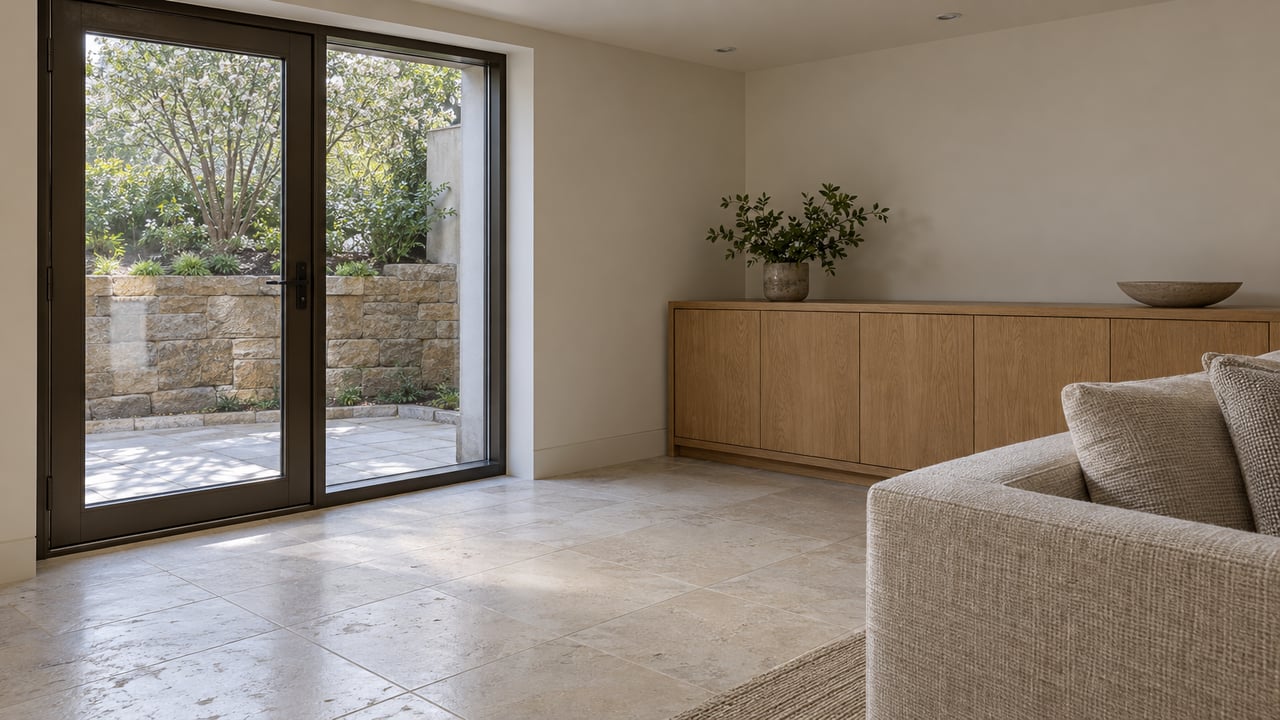
A basement apartment with its own entrance and a kitchenette used to be a simple line item on a Boulder listing. Now it triggers a set of questions that didn't exist two years ago. Is it permitted, or just built? Does the seller know its permit history, or only that a tenant has lived there for years without complaint? Can it be rented short term, or only long term? None of those questions come from the zoning code directly. They come from a gap between what Boulder now allows on paper and what's actually on file at the city, and that gap is exactly where buyers and sellers are running into friction this fall.
Boulder rewrote two of its most consequential housing rules within about fifteen months of each other. The city eliminated its long-standing cap on how many unrelated people could share a home. The state then forced every Front Range city, Boulder included, to allow accessory dwelling units by right and stripped homeowners associations of the power to ban them outright. Either change on its own would be worth a real estate agent's attention. Together, they mean a property's legal capacity, who can live there and what it can earn, moved faster than the paperwork that documents it. That's the part worth understanding before you write or accept an offer.
Boulder's occupancy limit dated back to zoning definitions built around "family," and for years it capped most homes at three unrelated occupants, with a four-person cap in high-density zones, as The Colorado Sun reported. Eric Budd, co-chair of the Bedrooms Are For People campaign, started pushing to change that in 2013. The campaign tried and failed to raise the cap through ballot measures in both 2020 and 2021. City council raised the limits as an interim step in 2023, in what Boulder Reporting Lab called a landmark vote at the time. Then, on March 6, 2025, council went further and repealed occupancy limits for unrelated people entirely, with the change taking effect that April.
The new standard doesn't count heads by household type. It follows the International Property Maintenance Code instead, which sets space requirements rather than relationship requirements: bedrooms must be at least 70 square feet, with 50 square feet per occupant in rooms shared by more than one person. Building and fire codes that govern life safety still apply. What's gone is the part of the code that asked whether the people living together were related.
Councilmember Nicole Speer, introducing the motion, said the vote mattered for reasons that went beyond square footage. Mayor Aaron Brockett, who had also helped draft Boulder's earlier cooperative housing ordinance, described that older process as still too complicated and too expensive to actually use, which is a detail worth sitting with, because it previews a pattern that shows up again with ADUs: a rule changing on paper doesn't automatically make the option easy to exercise. Boulder's co-op ordinance passed in January 2017, and as of 2021, only three new cooperative households had formed under it, according to Budd, who lives in one himself.
While Boulder was rewriting its occupancy code, the state legislature was rewriting the rules around accessory dwelling units. House Bill 24-1152 took full effect on June 30, 2025, and it requires every "Subject Jurisdiction" along the Front Range corridor, a list that includes Boulder, Denver, Fort Collins and their surrounding metro areas, to allow at least one ADU by right on any lot where a single-family home is allowed. Municipalities can still set objective standards for size, setbacks, height and design. What they can no longer do is say no by default.
The part of the law that changes the math for existing homeowners is the HOA provision. HB24-1152 strips homeowners associations in these jurisdictions of the authority to ban ADUs outright. An HOA can still require that a new unit match the siding, roof pitch or setbacks of the neighborhood. It cannot use those design standards as a way to prohibit the unit entirely. A covenant written decades ago that says no accessory structures, full stop, is no longer enforceable on that basis alone.
Boulder's own zoning code already allowed ADUs as a by-right use in nearly every residential zone before the state law arrived, with narrow exceptions in a handful of specific districts. The city had also already streamlined its own process ahead of the state mandate: since September 1, 2023, ADU applications go straight through the standard building permit review instead of requiring a separate administrative approval step first. A few other terms carry over regardless of when the unit was built: an ADU can't be sold separately from the main house, and short-term rental of either the ADU or the primary home is governed by separate city rules.
Here's where the geography starts to matter. Everything above describes rules inside Boulder's city limits. Property in unincorporated Boulder County, the foothill parcels, the pockets around Gunbarrel, the acreage outside the city boundary, runs under a different section of code entirely, and that section is currently being rewritten in real time.
Boulder County's Board of County Commissioners authorized a text amendment to the county's accessory dwelling regulations on March 24, 2026, directing staff to reevaluate the existing rule, found in Article 4-516.H of the county land use code, and consider broadening it. Staff presented initial scope ideas to the commissioners at a public work session on May 5, 2026. As of this fall, that process, tracked under docket DC-26-0002, is still open. The county's current rule isn't identical to the city's, and it's actively in motion.
| City of Boulder | Unincorporated Boulder County | |
|---|---|---|
| ADU allowed by right | Yes, except RH-6, MH, BMS, BCS, IS-1 and IM, according to Boulder's ADU guide | Currently governed by Article 4-516.H, which the county is actively rewriting |
| HOA authority to block it | No, under HB24-1152 an HOA cannot use covenants to ban an ADU outright | Same state law applies, but it's newer territory for county HOA-governed subdivisions |
| Short-term rental of the unit | Subject to separate city short-term rental rules | Governed by separate county short-term rental rules, not the city ordinance |
| Rulebook status in 2026 | City process streamlined since September 1, 2023; state law took effect in 2025 | Under active revision, docket DC-26-0002, authorized March 2026 |
For a buyer comparing a city lot against a county parcel with similar acreage, the ADU math isn't the same exercise. The city process was streamlined in 2023, and state law took effect in 2025; the county's rule is still being drafted this year.
None of this changes the fact that permit status, not zoning eligibility, is what shows up on a title report and a disclosure form. The city's own guidance is direct about this: previously unpermitted ADUs are common in Boulder, and many started as extra living space or a home office before being modified over time into a unit with a separate kitchen and sleeping area, often without the owner realizing that step required a permit. Legalizing one of these units now is possible under current code, but the building permit process brings the unit up to today's standards, not the standards that existed when it was built. Illegal work doesn't get grandfathered in.
That single fact is the crux of the compliance gap. A basement apartment can be fully legal under Boulder's occupancy rules, in the sense that however many unrelated people live there, that's no longer capped by relationship status. It can sit on a lot where an ADU is allowed by right under state law, and where the HOA has no legal basis to object to its existence. And it can still be an unpermitted structure that needs real work, and real money, to bring into compliance before it can be financed or appraised as what it actually is.
A few things worth confirming before a Boulder closing this year:
None of these questions show up automatically on a standard disclosure form. They come from actually pulling the permit history and asking the right person at the right office, which is a slower process than reading the zoning map, but it's the process that protects both sides of the transaction.
Can an HOA still refuse to approve my ADU application? An HOA can enforce reasonable, objective design standards, matching exterior materials or setbacks, for example. Under HB24-1152, it can no longer use those standards as a pretext to deny the ADU altogether.
Does Boulder's streamlined ADU permit process apply to unincorporated county parcels too? No. The faster review path is specific to the City of Boulder's own municipal code. Unincorporated county parcels fall under the separate rule currently being revised through docket DC-26-0002.
Rules like these tend to move faster than the paperwork that documents them, and figuring out where a specific property stands is exactly the kind of groundwork that shapes a clean offer or a clean listing. If you're weighing what a Boulder property's current permit and zoning status actually means for your sale or your purchase, The Mock Group can walk through what's on file with the city before you write the number down.
This article is general information, not legal, tax or financial advice. Consult a qualified professional about your situation.
Stay up to date on the latest real estate trends.


Whether you're selling or buying a home, relocating, or considering an investment property, The Mock Group welcomes the opportunity to make every step enjoyable and hassle-free for you.

GAIL MOCK
NATALIE MOCK
825 S BROADWAY ST BOULDER CO 80305