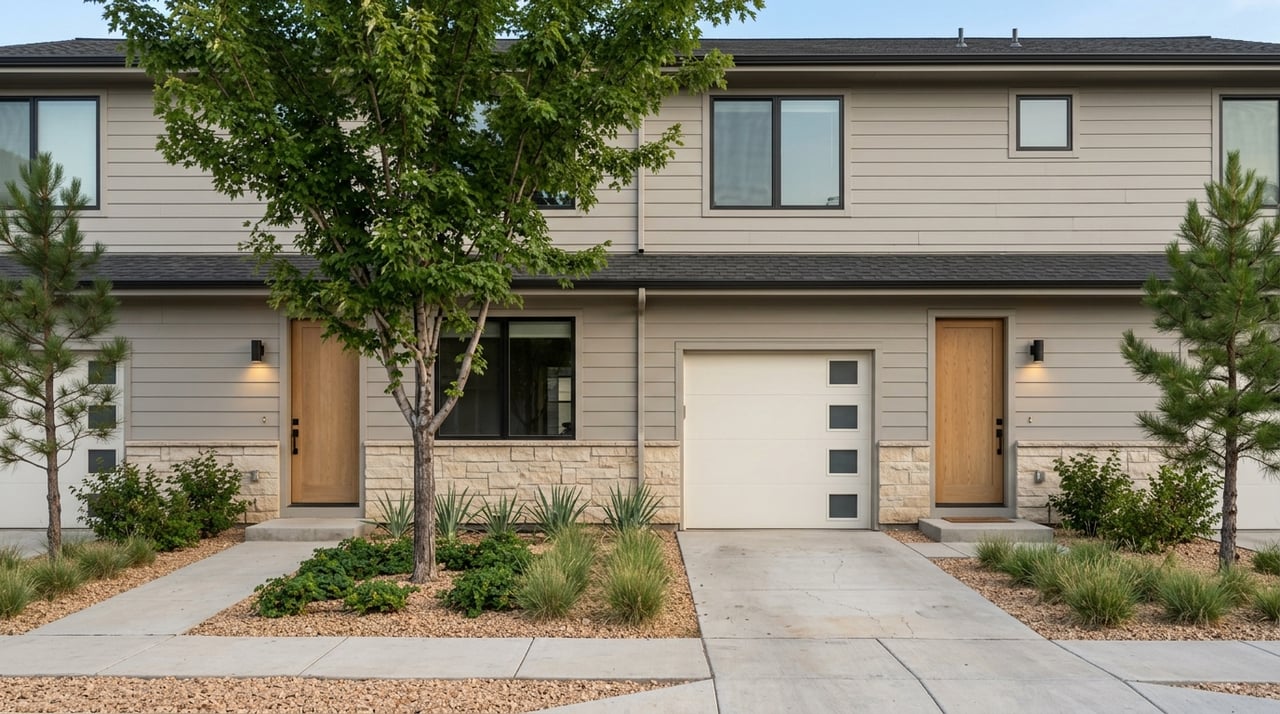
Investing in Lafayette Colorado Rentals in East Boulder County
April 16, 2026
April 16, 2026
If you are looking at Lafayette and East Boulder County for your next rental property, you are probably asking a simple question with a complicated answer: will the numbers actually work here? This corridor offers strong rents, tight supply, and long-term appeal, but it also comes with high entry prices and city-specific rules that can quickly change your strategy. In this guide, you will get a clear, grounded look at rent levels, vacancy, property fit, and compliance so you can evaluate opportunities with more confidence. Let’s dive in.
Lafayette stands out as a rental market where demand has stayed relatively firm, even as costs remain high. According to Zillow’s rental market trends for Lafayette, the average asking rent was $2,389 with 75 active rentals as of April 10, 2026.
That puts Lafayette in an interesting position within East Boulder County. It is below nearby averages in Louisville, Superior, Erie, and Boulder on the same Zillow product, but it still reflects a high-rent market compared with many Front Range communities.
At the same time, supply has been tight. A City of Lafayette housing analysis found that from 2018 to 2023, housing units grew 12% while households grew 14%, and residential vacancy fell from 4.3% to 2.0%. That kind of gap helps explain why rental demand has remained durable.
Strong rent does not always mean strong cash flow. In Lafayette, the bigger challenge for many investors is the cost to buy.
According to Zillow’s home value data for Lafayette, the city’s typical home value in 2026 was $655,655, down 3.6% year over year. That is lower than Louisville, Erie, and Boulder, but it is still a meaningful barrier if you are trying to create immediate income from a traditional long-term rental.
This is why Lafayette often looks more like a balanced appreciation-plus-income market than a pure yield market. If you are expecting a property to produce strong cash flow right away without a favorable purchase basis or value-add plan, you may find the math tight.
Looking at nearby rent averages can help you frame where Lafayette fits in the corridor. Using the same Zillow rental market trends source, here is the snapshot:
| Market | Average Asking Rent |
|---|---|
| Lafayette | $2,389 |
| Louisville | $2,585 |
| Superior | $2,683 |
| Erie | $2,895 |
| Boulder | $2,600 |
This comparison is helpful, but it should not be overread. Rent averages are only one part of the investment picture, and they do not tell you how a specific duplex, townhouse, or detached home will perform.
If you are exploring this market, property type matters as much as location. Lafayette’s planning direction specifically supports more missing-middle housing in existing neighborhoods, including detached houses, duplexes, triplexes, fourplexes, townhouse rows, cottage courts, and multiunit residential buildings, according to the city’s housing analysis and planning materials.
That matters because attached and infill-style properties may offer a better path to workable numbers than a detached single-family home bought at today’s land values. In practical terms, smaller attached assets often have a better chance of aligning rent potential with acquisition cost.
Detached homes can still make sense, but the return story may lean more on one or more of these factors:
Even though the broader Denver metro has softened from its tightest period, Boulder-area submarkets have remained relatively resilient. The Apartment Association of Metro Denver vacancy and rent report reported 5.2% vacancy in Boulder/Broomfield in July 2025, which was the lowest among metro regions in that report.
That same report showed 6.4% vacancy metro-wide, and 6.8% vacancy for properties under 100 units. Against that backdrop, Lafayette’s city-level 2.0% residential vacancy from 2023 suggests a tighter local picture than the broader metro trend.
For you as an investor, this points to an important takeaway: the biggest risk is not necessarily citywide oversupply. More often, the risk is buying the wrong product, overestimating rent, or underestimating lease-up and renovation downtime.
One of the biggest mistakes investors make in this area is assuming the rules are the same from one city to the next. They are not.
If you are considering short-term rental income in Lafayette, the city has a clear limit. The City of Lafayette short-term rental page states that rentals under 30 days require a short-term rental license, and the property must be the owner’s primary residence.
The process also includes:
For most traditional investors, this means a non-owner-occupied short-term rental strategy in Lafayette may not fit the city’s rules.
If a property falls inside Boulder city limits, the compliance picture changes again. The City of Boulder rental housing licensing page says standard rentals of 30 days or more require a valid rental license, and inspections are required for licensing and renewals.
Boulder also requires SmartRegs compliance for long-term rentals. The city notes that discovery of an unlicensed rental can result in legal action, so confirming the exact jurisdiction early is critical.
State law also matters when you underwrite and plan operations. Under Colorado’s 2025 security deposit law, effective January 1, 2026, the maximum security deposit was reduced to one month’s rent.
The law also allows tenants to pay that deposit in installments over at least six months. In addition, Colorado limits residential rent increases to one time in any 12-month period and requires 60 days’ written notice for residential tenancies without a written agreement.
The state’s renters’ rights summary also outlines rules for deposit returns, habitability, anti-retaliation protections, and tenant screening. Security deposits must generally be returned within 30 days after termination or surrender unless the lease extends that period up to 60 days, and landlords cannot withhold for normal wear and tear.
Wrongful withholding can carry serious consequences, including triple damages plus attorney fees and court costs. For investors, that means compliance is not a side issue. It is part of the financial model.
A conservative approach usually works best in this corridor. Start with current asking rent comps, but do not assume you will achieve top-of-market rent on day one.
A practical underwriting screen should include:
Because Lafayette’s average asking rent is $2,389 on the Zillow source cited above, it can be tempting to plug that number into a spreadsheet and move on. A stronger approach is to stress-test your deal for slightly lower rents, slower lease-up, or a short vacancy during turnover.
In Lafayette and East Boulder County, appreciation potential often ties closely to location quality and redevelopment context. The city’s planning direction supports infill and mixed-use redevelopment, and it notes that height flexibility can matter in redevelopment settings, according to the Lafayette housing analysis.
For investors, that suggests some of the strongest long-term opportunities may be near walkable corridors, employment access, and areas where infill product makes sense. In these cases, the upside may come from a mix of stable rental demand and future buyer appeal, not from monthly cash flow alone.
Before you move forward on a property, ask a local real estate advisor to help you verify the details that can affect performance right away.
Here are a few smart questions to ask:
These are not small details. In this corridor, they can materially change your projected return and your compliance obligations.
Lafayette is best viewed as a scarce-supply, high-entry-cost, moderate-income rental market. If you can buy well, improve the property, or target a denser attached format, the investment story may become much more durable.
If you are looking for a pure cash-flow play with easy entry and minimal regulation, this market may feel challenging. But if you want a location with resilient demand, strong regional appeal, and long-term upside tied to East Boulder County’s constrained supply, Lafayette deserves a closer look.
When you are weighing a purchase in Lafayette, Boulder, or nearby Front Range communities, working with a team that understands local boundaries, neighborhood dynamics, and investment tradeoffs can save you time and costly missteps. If you want help evaluating your options, connect with The Mock Group for thoughtful, locally grounded guidance.
Stay up to date on the latest real estate trends.

Whether you're selling or buying a home, relocating, or considering an investment property, The Mock Group welcomes the opportunity to make every step enjoyable and hassle-free for you.

GAIL MOCK
NATALIE MOCK
825 S BROADWAY ST BOULDER CO 80305