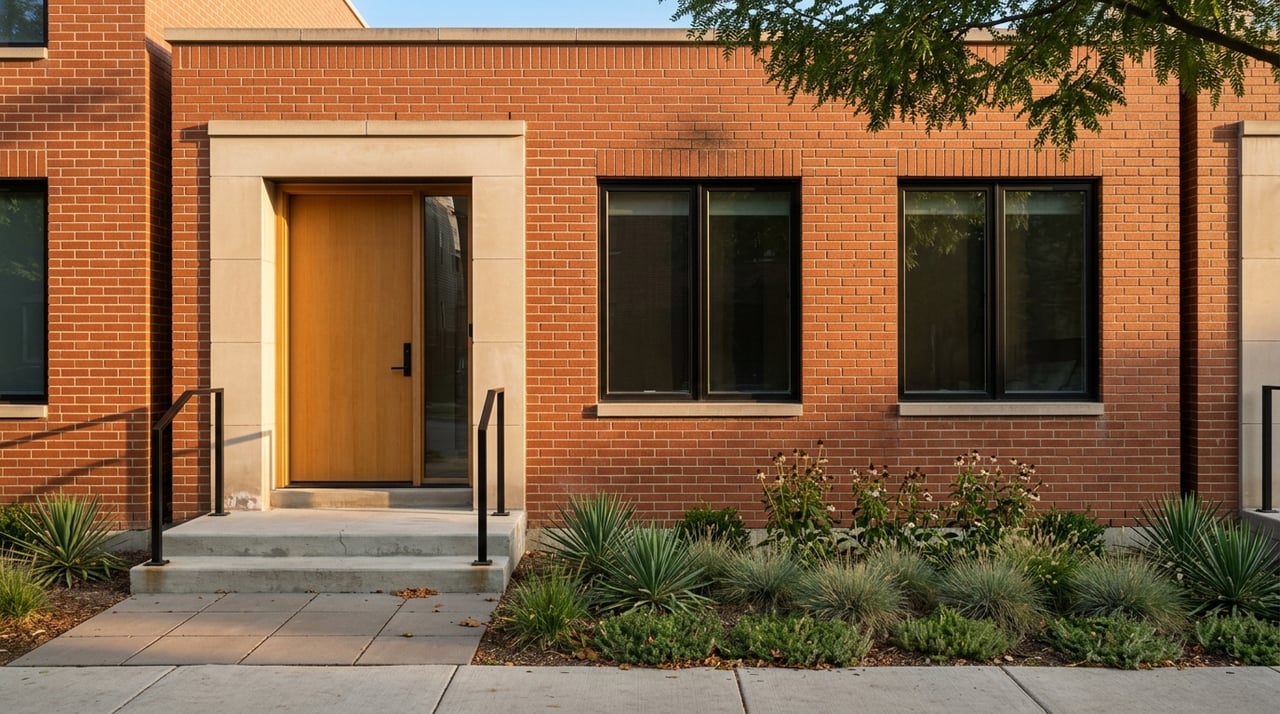
Boulder Buyers Expanding Their Home Search to Denver
July 23, 2026
July 23, 2026
If you love Boulder but keep running into tight inventory, fast decisions, or prices that push your comfort zone, Denver may deserve a place on your search list. Many Boulder buyers are not leaving their priorities behind. They are simply widening the map to find more housing choices, a different daily rhythm, or a better fit for their budget. If you are weighing that move, this guide will help you compare Denver and Boulder in a practical, grounded way. Let’s dive in.
For many buyers, the biggest reason is simple: more options at a lower citywide price point. Over the three months ending May 2026, Boulder’s median sale price was $854,489, while Denver’s was $634,620. That puts Denver about $219,869 lower, or roughly 25.7% below Boulder.
That broader affordability gap also shows up in long-term housing values. Census QuickFacts lists Boulder’s median value of owner-occupied housing units at $1,039,500, compared with $616,000 in Denver. In plain terms, Boulder’s owner-occupied value is about 1.69 times Denver’s.
Still, lower cost does not always mean slower pace. Homes in Denver sold in about 18 days on average during that same period, compared with about 50 days in Boulder. So if you expand your search into Denver, you may gain flexibility on price and property type, but you should still be ready to act.
One of the clearest differences between Boulder and Denver is scale. Denver has 715,522 people, 372,123 housing units, and 153.3 square miles. Boulder is much smaller, with 108,250 people, 47,842 housing units, and 26.3 square miles.
That size difference matters when you are house hunting. A larger city naturally gives you more neighborhood types, more building styles, and more price points. If your Boulder search feels narrow, Denver can work as a parallel market rather than a one-size-fits-all substitute.
Boulder does offer a mix of housing, including detached homes, attached homes, and multifamily properties. But the overall stock is smaller. That means Denver often feels deeper from a search perspective, especially if you are open to condos or townhomes.
Boulder’s housing pattern is shaped in part by its open-space approach. The city reports more than 45,000 acres of open space and 155 miles of trails, with a long-standing focus on preserving natural land and limiting sprawl.
Denver offers outdoor access too, but in a more urban format. The city has nearly 20,000 acres of urban and mountain parkland and 30 recreation centers. For you as a buyer, that often translates to a different daily experience: Boulder tends to feel more trail-centered and land-constrained, while Denver feels more neighborhood-driven and city-oriented.
A common mistake is thinking of Denver as a single comparison point. In reality, Denver is a collection of very different neighborhoods, each with its own housing stock, pace, and lifestyle pattern.
Areas often compared by Boulder buyers include Downtown Denver, Capitol Hill, LoHi or Highlands, RiNo, and Cherry Creek. These districts vary widely in atmosphere and housing type, from historic buildings and condos to newer urban residences and higher-end homes.
Price also varies much more than many buyers expect. Recent Redfin snapshots show Capitol Hill with a median sale price around $350,000, LoHi around $865,000, and Cherry Creek around $1.65 million. So yes, Denver is often cheaper than Boulder at the city level, but it is not uniformly cheaper in every neighborhood.
If your goal is simply to spend less, you need to compare neighborhood to neighborhood, not just city to city. Some Denver areas may open the door to lower monthly costs or a different property type. Others may land right back in Boulder-level pricing.
This is why a wider search works best when you know what trade-offs you are willing to make. You may accept a condo instead of a detached home, a more urban setting instead of a quieter one, or a different commute pattern in exchange for more choice.
If you still expect to spend time in Boulder, your route matters as much as your address. For Boulder-to-Denver mobility, US-36 is the key corridor.
According to CDOT, the US-36 Express Lanes connect Boulder to Denver at I-25, link to the reversible I-25 Central Express Lanes, and support bus rapid transit. RTD’s Flatiron Flyer also runs between Denver, Westminster, Broomfield, Louisville, Superior, and Boulder. If your routine depends on regular trips between the two cities, that corridor should be central to your home search.
Denver also offers a transit advantage that many Boulder buyers notice right away. RTD says its light rail system spans more than 60 miles and 57 stations, and the D Line runs from 30th & Downing through downtown Denver to I-25 & Broadway. If you work downtown or want more non-driving options, some Denver locations can reduce car dependence in a way that Boulder often cannot.
Average commute data can help set expectations, but it should not replace a real test. Census QuickFacts lists mean travel time to work at 18.1 minutes in Boulder and 24.9 minutes in Denver.
That tells you Denver residents generally accept a longer average commute. It does not tell you what your day will feel like. Before you commit, test your likely door-to-door routine at realistic times and along the corridor you would actually use.
Budget matters, but it is rarely the whole story. The better question is how you want your day-to-day life to feel.
If your top priority is quick access to open space, trails, and Boulder’s smaller footprint, Boulder may still be the right fit. The city’s open-space system and extensive trail network shape daily life in a way that is hard to replicate.
If you want a more urban routine, Denver can offer a broader lifestyle mix. Visit Denver highlights districts built around museums, street art, restaurants, shopping, sports, and entertainment. You can still enjoy Colorado outdoor access, but it comes wrapped in a more city-centered experience.
Expanding into Denver may make sense when:
Staying focused on Boulder may make more sense when:
Not every move has to start with a purchase. If you are still learning Denver’s neighborhoods, renting first can give you time to test commute patterns, building types, and lifestyle fit.
That option may also help on cost. The research report notes Denver’s median gross rent at $1,831, compared with Boulder’s $2,018. If you want to explore Denver without rushing into a purchase, that lower rent level may create useful breathing room.
A wider search works best when you stay clear on your priorities. Start by identifying your non-negotiables, then sort the rest into nice-to-have items.
A practical checklist can help:
For many Boulder buyers, the goal is not to replace Boulder. It is to create more paths forward. Denver can offer that, especially when you approach the search with clear criteria and local guidance.
If you are comparing Boulder and Denver, the right answer is rarely just about price. It is about how you want to live, how you want to move through your week, and what type of home gives you the best overall fit. A thoughtful side-by-side search can help you see that more clearly and move with confidence.
If you want help comparing Boulder with Denver neighborhoods, condos, townhomes, or single-family options, The Mock Group can help you build a search strategy that fits your goals.
Stay up to date on the latest real estate trends.



Whether you're selling or buying a home, relocating, or considering an investment property, The Mock Group welcomes the opportunity to make every step enjoyable and hassle-free for you.

GAIL MOCK
NATALIE MOCK
825 S BROADWAY ST BOULDER CO 80305